




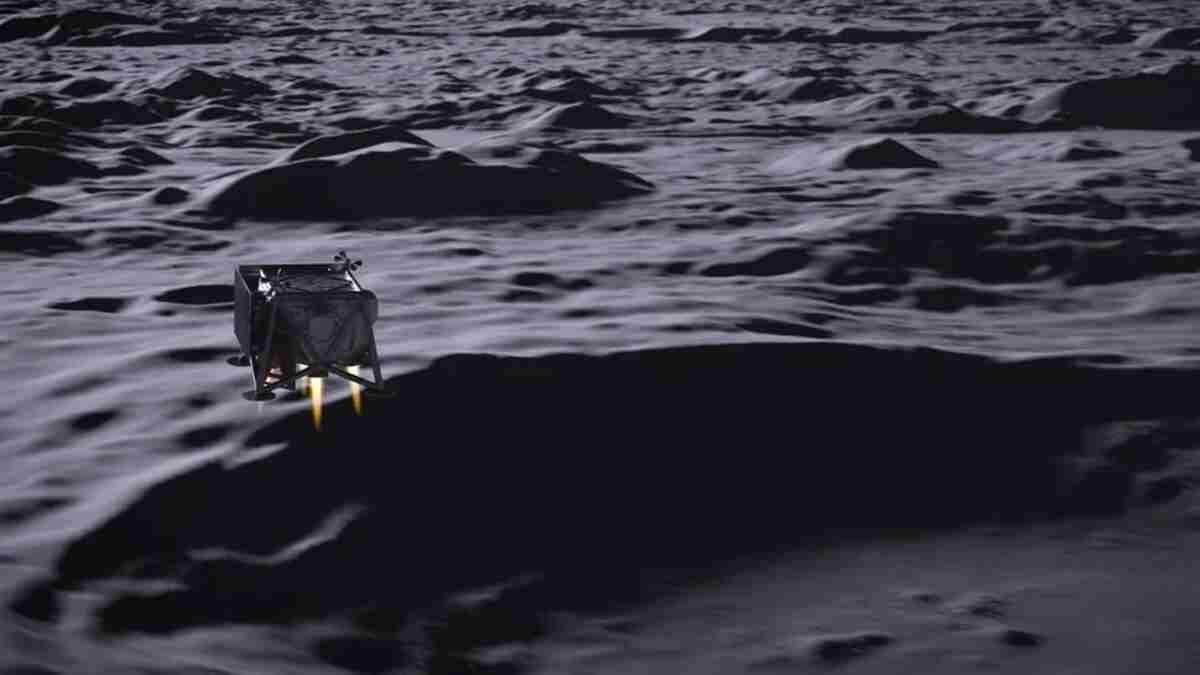
An old man-made device has plowed yet another new crater into the lunar surface. On 5 August 2026, the upper stage of a Falcon 9 rocket from SpaceX collided with the Moon near Einstein crater, etching a roughly 60-foot-wide by 10-foot-deep new scar into the crater. Six days later, NASA’s Lunar Reconnaissance Orbiter recorded the first unequivocal images of the new impact site, turning a foretold event into a real one.
The rocket stage that launched from Florida in January 2025, NASA’s Firefly Aerospace Blue Ghost Mission 1 lander and another spacecraft. After delivering its payloads on their intended trajectories, the nearly 9,000-pound upper stage was left floating in a geostationary transfer orbit intersecting the Moon’s orbit. The weak gravitational attraction of Earth, the Moon and the Sun worked over the next 18 months to alter its course until the stage’s impact with the lunar surface was assured.
Blacking out at roughly 5,400 miles per hour, the stage collided with the lunar surface causing ejecta from various depths of the lunar regolith. NASA’s imagestaken between August 11 and 12 at an altitude of about 60 milesshow bright and dark rays of debris radiating out from the crater. The darker streaks are comprised of weathered dust and rocks that had been exposed to solar winds, cosmic rays, and micrometeorites for millennia. This older material was excavated from about a foot and a half beneath the surface. Brighter rays nearer the rim are fresher material from greater depths that had been protected from space weathering until the impact. Doing so required a long process of planning.
The Lunar Reconnaissance Orbiter travels across the surface of the moon at a speed of approximately one mile per second. This meant that engineers had the difficult task of angling the craft so that its Narrow-Angle Camera fired directly at the predicted impact site on each revolution. Even a ten second error would have resulted in a ten mile difference in location.
With resolution of three feet, features the camera captured provided the scientists with a way of calculating the crater width from the bright rim and depth from the length of the shadow cast. Meanwhile, South Korea’s Danuri lunar orbiter, which is monitoring the space from above, captured images of the site several hours after the impact, verifying the region as accurate to within 0.5miles of the NASA forecasts.
This finally allowed the LRO team to determine the specific co-ordinates to be 19.4759 degrees north and 266.7138 degrees east at 511 meters high. It is not the first artificial object to collide with the Moon, but it is the first time a human-made object is known to have impacted there, and the detailed information from before and after is valuable and exciting. Earth’s sleepy neighbor has already been achieved of numerous more or less deliberate impactors, from the Russian Luna 2 (launched 1959) onwards.