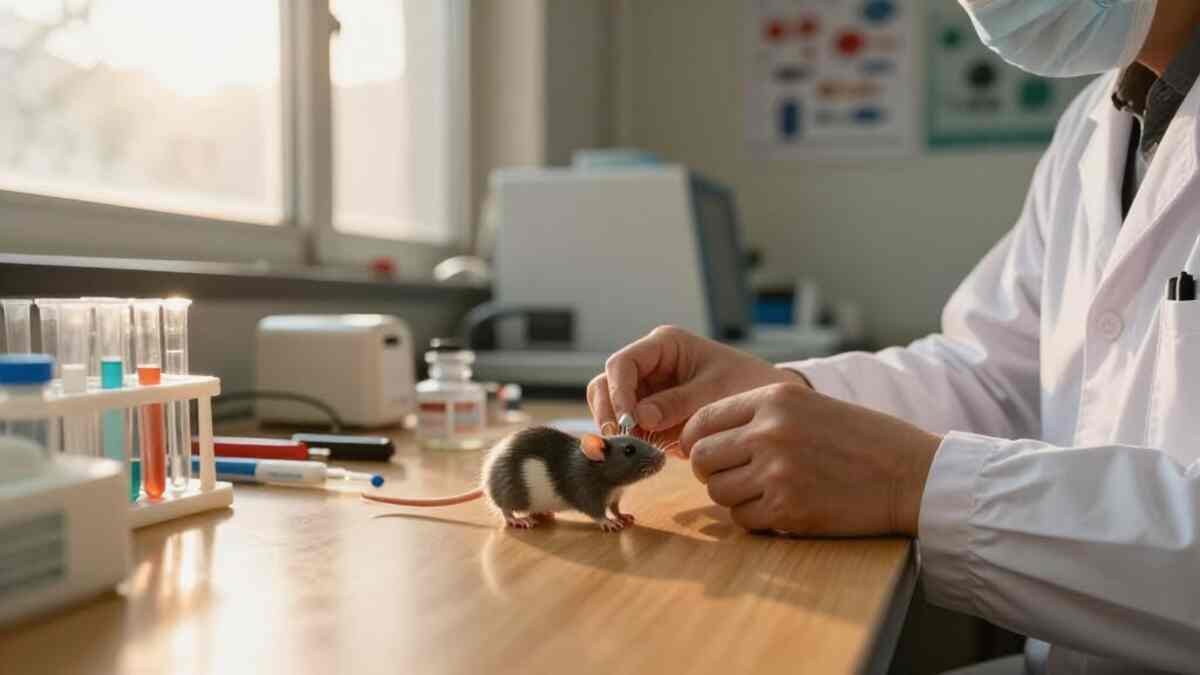
Researchers found that even as little as reintroducing a protein to a tiny area of the brain can turn back several aspects of aging in mice in only 30 days. The protein Menin may work to improve inflammation, metabolism, and memory, opening up a fresh avenue of research on the brain’s role in aging.
The team, from Xiamen University in China, published the study in PLOS Biology in March 2023. As the science of lifespan extension advances and draws public attention, the work has garnered increased attention again in 2026. The discovery implies that aging may not be only about organ failure with age, and the decline might also be the result of alterations in a key regulatory system within the brain.
The team studied the hypothalamus, an important, yet not very large, part of the brain that is responsible for integrating different key systems including the metabolism and controlling the release of many hormones. They studied the VMH and its role in influencing metabolism.
In their experiments, they found that in certain neurons of the VMH, the level of Menin decreased as the mice aged. This decreased level of Menin was related to higher levels of inflammation and several hallmarks of aging like inferior learning and memory, bone loss, and skin thinning.
To determine if the decrease in Menin could itself be causing some of these changes, the team decreased the amount of the protein in young mice. The mice then started to show some hallmarks of aging, such as inflammation, learning, and memory difficulties, and bone and skin deterioration.
This all indicates that Menin could regulate aging pathways, and not just age in other events.
The researchers then asked whether reinstating Menin could reverse age-related abnormalities in older animals. To do this, the researchers used a gene-delivering method to elevate Menin levels in the VMH of mice about 20 months of age.
A month following treatment, the animals had measurable effects on multiple markers of physical aging, including improvements in skin thickness, bone health, and in tests of learning, memory, and balance. The researchers also noted positive effects on markers of metabolism and inflammation.
The treatment was linked to longer lifespans in the mice studied, but this does not prove how much the method could extend lifespan in other animals or humans. The experiment also used targeted gene delivery into a single brain region, not an injection or standard dietary intervention.
These findings are remarkable because the alterations took place in many tissues following intervention in a small region of the brain. Though, the findings do not imply that all aspects of aging were reversed or that the animals were biologically reset.
Another connection detected was that between Menin and D-serine, an amino acid that is used to communicate between nerve cells. D-serine plays a role in activating NMDA receptors, which are critical to learning and memory processes.
As the levels of Menin decreased, the team noticed alterations in D-serine synthesis and signaling pathways linking the hypothalamus and a specific brain area called the hippocampus, which is responsible for memory.